Home › Services › Stone & Brick Retaining Walls
Stone & Brick Retaining Walls in Newton, MA
Natural stone and brick walls that look like they've always been part of the landscape — because they're built to last like it too.
Call (617) 766-1539 for a free estimate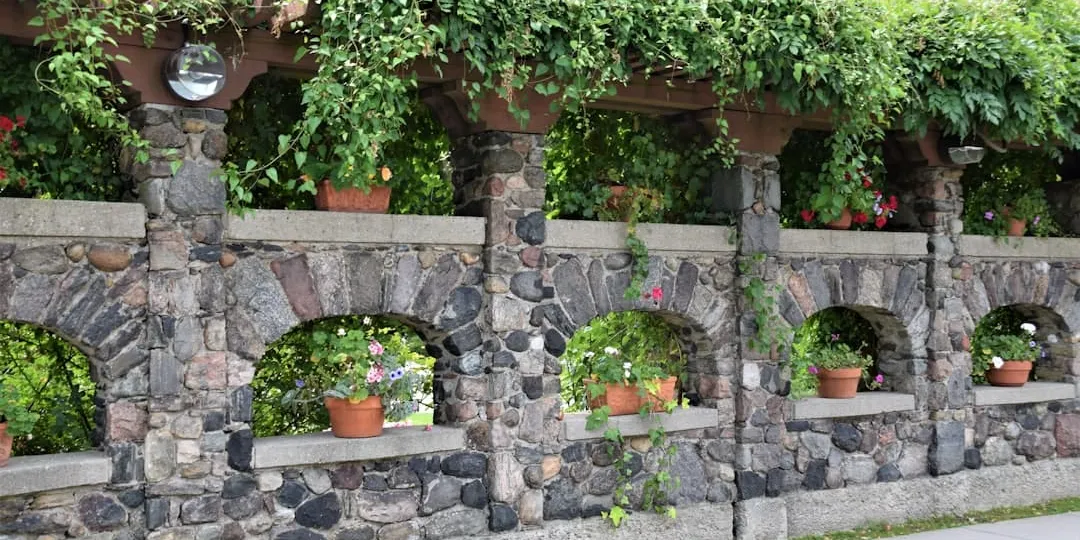
What this service covers
Natural stone is what you choose when the wall needs to be beautiful as well as functional. We build stone retaining walls in granite, fieldstone, limestone, and other natural materials, plus brick walls for a more formal or traditional look. Stone walls cost more than concrete or block, but they weather beautifully, last indefinitely, and add real value to a property. A well-built stone wall in Newton will outlive the house it supports — we've seen fieldstone walls in this area that are 100 years old and still plumb. The key is proper footing, drainage, and the right stone for the application.
Why Choose Natural Stone
Stone is the material that looks like it belongs in the landscape. A fieldstone wall in Newton Centre looks like it grew there — like it was always part of the hillside. That's not an accident; New England fieldstone is literally from here, pulled out of the same soil your house sits on. The color matches the landscape because it is the landscape.
Beyond aesthetics, stone is incredibly durable. Granite — which is what most New England fieldstone is — doesn't absorb water the way concrete does, so freeze-thaw doesn't damage it the way it damages manufactured materials. A stone wall with proper drainage and footing will last 75 to 100+ years. The oldest retaining walls still standing in the Newton area are stone, and some of them date to the 1800s.
The trade-off is cost. Stone walls are the most expensive option, running $40 to $60 per square foot or more depending on the stone type and the complexity of the installation. Dry-laid stone (no mortar) is less expensive but requires more skill, and not every wall is a candidate for dry-laid construction. We'll give you an honest assessment of what makes sense for your project.
When You Need a Stone or Brick Retaining Wall
Stone is the choice when the wall needs to look like it belongs in the landscape, not just function in it. If you live in one of Newton's older neighborhoods — Newton Centre, Chestnut Hill, Waban — where stone walls are already part of the streetscape, a concrete block wall will look wrong no matter how well it's built. Stone matches the character of the property, and it ages into the landscape rather than fighting it.
Brick is the right call when the house itself is brick and the wall should match. Brookline and the older sections of Newton have a lot of brick homes, and a brick retaining wall ties the landscape to the architecture. Brick walls are more formal than fieldstone — clean lines, uniform color, a traditional New England look that never goes out of style.
You might also choose stone for longevity. A well-built stone wall will outlast every other material — we've seen fieldstone walls in Newton that are 80 to 100 years old and still holding. If you're investing in your property for the long term and want a wall that your grandkids will still be looking at, stone is the only material that reliably delivers that kind of lifespan.
The trade-off is cost. Stone walls run $40 to $75 per square foot depending on the stone type, which is more than concrete or block. But the cost per year of ownership is lower than any other material, because a stone wall doesn't need replacing in 20 or 30 years — it just keeps standing.
Stone Types We Work With
Fieldstone is the local classic — roundish stones pulled from New England farms and fields, each one a different size and shape. A fieldstone wall has a rustic, organic look that fits Newton's older neighborhoods and wooded lots. No two fieldstone walls look the same, because no two piles of fieldstone are the same. This is the most common stone wall type in Newton, Waban, and Chestnut Hill.
Granite is the structural choice — flat-cut granite blocks for a more formal look, or rough-split granite for a rugged one. Granite is the hardest stone we use, nearly impervious to water, and it holds tight lines for a clean, architectural appearance. You see a lot of granite walls in Wellesley and Weston, where properties are larger and the aesthetic is more curated.
Limestone offers a warmer, lighter color than granite — pale gray to tan — with a softer look that works well in garden settings. It's less common in our area but available on request. Brick is the formal option: clean lines, uniform color, and a traditional New England feel. Brick retaining walls are common in Brookline and the older parts of Newton, where they match the house architecture.
Why Stone Walls Fail
Stone walls fail for different reasons than concrete or block walls. The stone itself is nearly indestructible — New England granite doesn't absorb water, doesn't crack from freeze-thaw, and doesn't degrade from UV. When a stone wall fails, the problem is almost always in what's behind it or below it.
The most common failure mode for mortared stone walls is the same as any other wall: hydrostatic pressure from water buildup behind the wall. Mortar makes the wall impermeable, so water can't drain through it. If there's no drainage stone and pipe behind the wall, water builds up and pushes. The mortar joints crack first, then individual stones shift, and eventually the wall leans or bulges. The fix is always the same — rebuild with proper drainage — but the failure is preventable from the start.
Dry-laid stone walls fail differently. Because water drains freely through the gaps between stones, hydrostatic pressure isn't the issue. Instead, dry-laid walls fail when the footing settles unevenly or when the base material washes out from under the wall. A dry-laid wall on an inadequate base will sink in spots, and the stones above the settled area shift and drop. This is repairable — we re-stack the stones and rebuild the base — but it means the original installation skipped the footing.
Brick walls have their own failure mode: spalling. When moisture gets into the brick and freezes, the face of the brick pops off in flakes. Older bricks are more susceptible, especially those that weren't fired at high temperatures. If your brick wall is showing signs of spalling, the affected bricks need replacement before the structural integrity is compromised. Sealing the wall can slow the process, but the long-term fix is using the right brick in the first place — hard-fired brick rated for ground contact.
Dry-Laid vs. Mortared Stone
Dry-laid stone walls use no mortar — the stones are stacked so their weight and shape hold them in place. This is the old New England method, and it has real advantages: water drains freely through the wall (no drainage system needed), the wall flexes slightly with ground movement, and repairs are as simple as re-stacking a shifted stone. Dry-laid walls work best under 4 feet in height.
Mortared stone walls use mortar between stones, creating a rigid structure that handles taller walls and heavier loads. Mortared walls need drainage stone and pipe behind them, just like concrete walls, because water can't pass through. The look is more formal and the wall is stronger, but if the wall ever moves, repairs are more involved than just restacking a stone.
We build both, and we'll recommend the right method for your situation. For garden walls under 3 feet in a wooded setting, dry-laid fieldstone is often the best choice. For walls over 4 feet or holding back a driveway, mortared stone or a combination of stone face on a concrete structure is the right call.
What Affects the Cost of a Stone Wall
Stone wall cost depends on the stone type, the installation method, the wall height, and the site access. Fieldstone is the most affordable natural stone at $40 to $55 per square foot, because it's locally sourced and doesn't need to be cut to size. Cut granite runs $50 to $75 per square foot — the stone itself is more expensive, and shaping it takes longer. Brick walls typically run $35 to $50 per square foot, with brick being less expensive than natural stone but more than segmental block.
The installation method changes the cost significantly. Dry-laid fieldstone walls are less expensive than mortared ones because there's no mortar to mix and no curing time — the stones are stacked and the wall is done. But dry-laid requires more skill, and not every wall is a candidate (walls over 4 feet usually need mortar for structural reasons). Mortared walls cost more because of the labor and materials, but they handle taller walls and heavier loads.
Wall height drives cost the same way it does for any retaining wall. A 2-foot garden wall in fieldstone might cost $1,500 to $3,000 installed. A 6-foot structural stone wall with drainage, footing, and engineering could run $15,000 to $30,000 or more. The jump from 3 feet to 6 feet isn't linear — taller walls need deeper footings, more drainage infrastructure, and often a permit.
Site access is the wildcard. Stone is heavy — a single pallet of fieldstone weighs 3,000 to 4,000 pounds. If we can get a truck to the wall location, delivery is straightforward. If the wall is in a backyard with no machine access, we're carrying stone by wheelbarrow, and that adds labor time. Newton's older neighborhoods with narrow side yards and mature landscaping can make access tricky, but we've done it hundreds of times and we plan for it in the quote.
We give free on-site estimates with itemized quotes. You'll see the stone cost, the labor, the drainage, the footing, and the delivery broken out separately so you know exactly what you're paying for.
Stone Walls and Newton's Character
Newton has a specific architectural character — older homes, stone walls that have been there for decades, a landscape that values permanence. A new stone wall should look like it belongs, not like it was dropped in from a catalog. We match stone type and color to the existing landscape and architecture, so the wall adds value to the property rather than looking like an afterthought.
In practice, that means fieldstone for wooded lots and older homes, granite for properties with existing granite walls or steps, and brick where the house itself is brick. We source stone locally where possible — New England granite and fieldstone are abundant, and using local stone keeps the wall connected to its place. If you've seen a stone wall in Newton you like, send us a photo. We can probably match it.
Frequently Asked Questions
How much does a retaining wall cost in Newton, MA?
Most retaining walls in the Newton area run $20 to $60 per square foot depending on the material and wall height. Concrete and poured walls tend toward the higher end; landscape timber and segmental block walls are more budget-friendly. Every project is different — we give you a free, no-pressure quote so you know the exact number before any work starts.
Do I need a permit to build a retaining wall in Newton?
Newton requires a building permit for retaining walls over 4 feet tall (measured from the bottom of the footing). Walls under 4 feet usually don't need one, but it depends on site conditions and proximity to property lines. We handle the permit process for you — you don't have to deal with the town yourself.
How long does a retaining wall last?
A properly built retaining wall should last 50 years or more. The key word is "properly" — poor drainage, inadequate footing depth, and cheap materials cut that lifespan to 10-15 years. We build walls to handle New England freeze-thaw cycles, not just to look good on day one.
What's the best material for a retaining wall in Massachusetts?
It depends on what the wall needs to do. Concrete is the strongest and best for structural walls holding back significant earth. Natural stone looks the best and weathers beautifully. Segmental block (interlocking concrete blocks) is a great middle ground — durable, affordable, and available in textures that mimic stone. We'll recommend the right material for your specific situation, not whatever's most profitable for us.
Can you fix a leaning or cracked retaining wall?
Sometimes. If the wall is leaning less than 2 inches and the cracks are surface-level, repair is usually possible — we reinforce, re-drain, and stabilize. If it's leaning significantly or the footing has failed, replacement is safer and often cheaper than a repair that won't hold. We'll give you an honest assessment either way.