Home › Services › Retaining Wall Installation
Retaining Wall Installation in Newton, MA
Built to hold back earth and handle New England weather — done right the first time.
Call (617) 766-1539 for a free estimate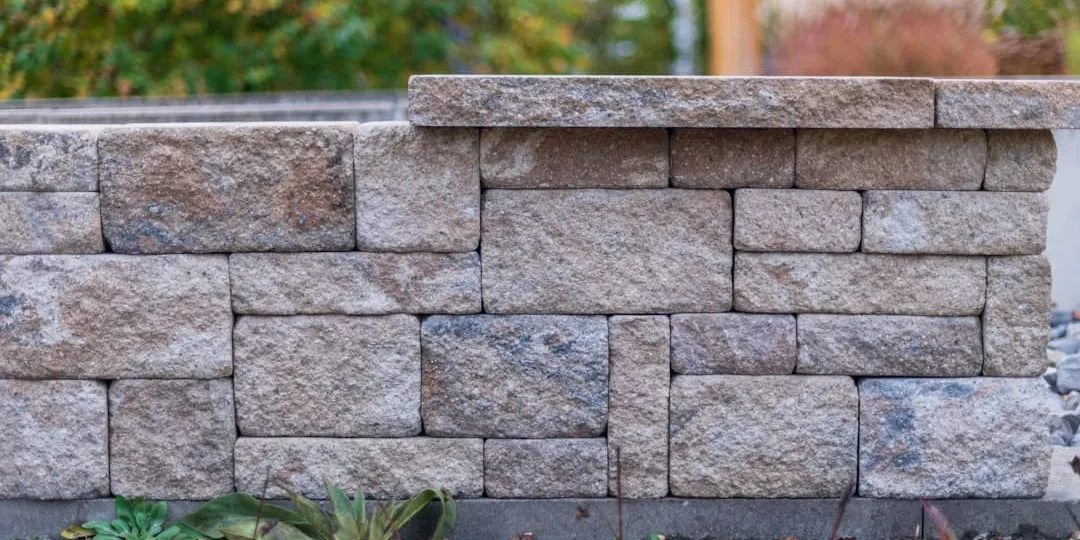
What this service covers
A retaining wall that fails in five years wasn't built right, no matter how good it looked on day one. We install retaining walls across Newton and the surrounding suburbs, engineered for the specific soil, slope, and drainage conditions of your property. That means proper footing depth below the frost line, compacted base material, geogrid reinforcement where the load demands it, and drainage stone behind the wall so freeze-thaw pressure doesn't push it forward. Whether you need a 2-foot garden wall or a 10-foot structural wall holding back a hillside, the process is the same: site assessment, material recommendation, honest quote, clean installation.
What Goes Into a Retaining Wall That Lasts
Most retaining walls you see leaning or cracked in Newton weren't built wrong in an obvious way — they were built incomplete. The wall itself was fine, but the footing was too shallow, or there was no drainage stone behind it, or the base wasn't compacted. Water built up behind the wall, the soil froze and expanded, and the wall got pushed forward an inch at a time until it was structurally compromised.
We build differently. Every wall starts with a footing that goes below the frost line — 48 inches in Massachusetts. The base gets compacted gravel, not just soil. Behind the wall we install drainage stone and a perforated pipe to channel water away, because water pressure is what fails most retaining walls, not the weight of the earth. For walls over 4 feet, we use geogrid reinforcement tied back into the soil, which distributes the lateral force and prevents the wall from tipping.
The material matters too, but less than people think. A properly built segmental block wall will outlast a poorly built poured concrete wall by decades. The engineering is in the ground, not the face.
When You Need a Retaining Wall
You might need a retaining wall if your property has a slope that's causing erosion, if rainwater washes soil downhill every storm, or if uneven ground is making part of your yard unusable. A retaining wall turns that slope into level, functional space — a patio, a lawn, a garden bed, or a parking area.
Some signs are obvious. If soil is washing onto your driveway or sidewalk every time it rains, something needs to hold it back. If your yard slopes enough that mowing is a chore or the lower section stays soggy, a low wall can fix the drainage and give you flat ground. If you're building a patio, walkway, or driveway on a slope, a retaining wall creates the level base those structures need.
Other signs are less obvious but just as important. If your neighbor's property is higher than yours and the fence line is starting to shift, the soil between the two properties is moving. If your foundation is exposed on one side because the grade has eroded away over the years, a wall can restore the soil level and protect the foundation. And if you're planning any hardscape project — a pool, a driveway, a patio — on sloped ground, the retaining wall usually comes first.
In Newton specifically, the hillier neighborhoods like Chestnut Hill, Newton Centre, and the areas near the Charles River are where we get the most calls. But flat lots need walls too — for raised garden beds, driveway edges, and anywhere you want to define a space.
The Installation Process
It starts with a site visit. We look at the slope, the soil type, what the wall is holding back, and what's above and below it. A wall holding back a flat garden bed has different requirements than one holding back a driveway or a hillside with a house on top. We also check for existing drainage patterns — where does water currently flow when it rains?
From there we recommend a material, give you a clear quote, and schedule the work. The installation itself goes in this order: excavate to the footing depth, lay and compact the base, set the first course level (everything above depends on this), stack subsequent courses, install drainage stone and pipe behind the wall, backfill in lifts with compacted material, and cap the wall. For most residential walls, installation takes 2 to 5 days depending on length and height.
We handle the permit process for walls over 4 feet, which Newton requires. You don't deal with the town — we do. And we clean up the site completely, so you're not left looking at a construction zone.
What Affects the Cost of a Retaining Wall
Retaining wall cost depends on five things: wall height, wall length, material choice, site access, and drainage requirements. Height is the biggest driver — a 6-foot wall needs engineering, deeper footing, and more reinforcement than a 3-foot wall, and the cost per square foot goes up accordingly.
Material choice sets the baseline. Segmental block walls run $20 to $45 per square foot. Poured concrete runs $40 to $60. Natural stone runs $40 to $75 or more depending on the stone type — fieldstone is less, cut granite is more. Timber is the cheapest at $15 to $25, but it won't last as long in New England's climate.
Site access matters more than people expect. If we can get an excavator to the wall location, excavation is fast. If the wall is in a backyard with a narrow side yard and no gate access, we're digging by hand or running wheelbarrows — and that adds labor time. Newton's older neighborhoods in particular have tight lots where machine access isn't always possible.
Drainage requirements vary by soil. Clay-heavy soil (common in Newtonville and West Newton) holds water longer, which means more drainage stone, a bigger pipe, and sometimes a dry well to manage runoff. Sandy soil drains on its own and needs less drainage infrastructure. We assess the soil during the site visit and build the drainage to match — you don't pay for drainage you don't need, but you also don't get a wall that fails because we underbuilt it.
The only way to get an accurate number is a free on-site estimate. We give you an itemized quote — material, labor, drainage, permitting — so you can see exactly what drives the cost and decide what makes sense for your budget.
Why Retaining Walls Fail
Most retaining walls don't fail because the material was wrong or the wall itself was poorly built. They fail because of what's underground — the footing, the drainage, and the base preparation. Understanding these failure modes is the first step toward building a wall that doesn't repeat them.
Hydrostatic pressure is the cause behind most wall failures we see in Newton. When water saturates the soil behind a wall and has no path to drain, it pushes outward with surprising force — a foot of water behind a 4-foot wall exerts hundreds of pounds of lateral pressure per square foot. Over months and seasons, that pressure shifts the wall forward, cracks the joints, and eventually causes a visible lean or bulge. The fix is always the same: drainage stone and a perforated pipe behind the wall, venting to daylight or a storm system. But a lot of contractors skip this step to save a day of work, and the homeowner pays for it three years later.
Footing depth is the second killer. In Massachusetts, the frost line is 48 inches. If a wall's footing sits above that line, the soil beneath it freezes and expands every winter, lifting the wall unevenly. The wall tilts, cracks at the base, and after a few winters the structural integrity is gone. This is a shortcut that's invisible on day one — the wall looks fine — but the first hard winter starts the damage.
Base compaction is the third common failure. A wall built on uncompacted soil or a thin layer of gravel will settle unevenly as the base material compresses under the wall's weight. The wall sinks in spots, shifts at the joints, and eventually leans. Proper base preparation means compacted gravel in lifts — not just dumped and leveled, but mechanically compacted so the base is as dense as it will ever get before the wall goes on top.
The pattern across all three failure modes is the same: the shortcuts are all underground, where the homeowner can't see them. The wall looks fine when the contractor leaves. The failure shows up months or years later, after the contractor is gone and the warranty (if there was one) has expired. That's why we build every wall the same way — footing below frost, drainage behind, compacted base — regardless of whether the homeowner asked for it. It's not an upgrade. It's how you build a wall that lasts.
Materials We Install
Segmental block (interlocking concrete blocks) is the most common choice in our area — durable, affordable, and available in textures that mimic natural stone. Poured concrete is the strongest option, best for structural walls or where a clean modern look is wanted. Natural stone — granite, fieldstone, limestone — costs more but weathers beautifully and looks like it belongs in the landscape. Timber walls are the budget option, though they have the shortest lifespan in New England's climate.
We'll recommend the right material for your situation, not whatever's most profitable for us. If a segmental block wall will do the job at half the cost of stone, we'll say so. If you need poured concrete for structural reasons, we'll explain why — and show you the engineering logic, not just give you a number.
Why Installation Quality Matters in Newton
Newton's soil is mostly glacial till — a mix of clay, sand, and rocks that doesn't drain uniformly. Some areas near the Charles River have high water tables, especially in Auburndale and Newton Lower Falls. The freeze-thaw cycle here is brutal: we get 40 to 60 freeze-thaw cycles per winter, and each one expands whatever water is in the soil behind your wall. A wall without proper drainage will move an inch or two per winter, and after a few years it's visibly leaning.
The neighborhoods matter too. Newton Centre and Chestnut Hill have a lot of sloped lots where retaining walls are structural — they hold back earth that a driveway or patio sits on. Newtonville and West Newton have more flat lots, but the clay-heavy soil still demands good drainage. Whatever your situation, we've seen it before and we build for it specifically.
Frequently Asked Questions
How much does a retaining wall cost in Newton, MA?
Most retaining walls in the Newton area run $20 to $60 per square foot depending on the material and wall height. Concrete and poured walls tend toward the higher end; landscape timber and segmental block walls are more budget-friendly. Every project is different — we give you a free, no-pressure quote so you know the exact number before any work starts.
Do I need a permit to build a retaining wall in Newton?
Newton requires a building permit for retaining walls over 4 feet tall (measured from the bottom of the footing). Walls under 4 feet usually don't need one, but it depends on site conditions and proximity to property lines. We handle the permit process for you — you don't have to deal with the town yourself.
How long does a retaining wall last?
A properly built retaining wall should last 50 years or more. The key word is "properly" — poor drainage, inadequate footing depth, and cheap materials cut that lifespan to 10-15 years. We build walls to handle New England freeze-thaw cycles, not just to look good on day one.
What's the best material for a retaining wall in Massachusetts?
It depends on what the wall needs to do. Concrete is the strongest and best for structural walls holding back significant earth. Natural stone looks the best and weathers beautifully. Segmental block (interlocking concrete blocks) is a great middle ground — durable, affordable, and available in textures that mimic stone. We'll recommend the right material for your specific situation, not whatever's most profitable for us.
Can you fix a leaning or cracked retaining wall?
Sometimes. If the wall is leaning less than 2 inches and the cracks are surface-level, repair is usually possible — we reinforce, re-drain, and stabilize. If it's leaning significantly or the footing has failed, replacement is safer and often cheaper than a repair that won't hold. We'll give you an honest assessment either way.