Home › Services › Concrete Retaining Walls
Concrete Retaining Walls in Newton, MA
The strongest wall for structural loads — poured concrete built for maximum durability and clean modern lines.
Call (617) 766-1539 for a free estimate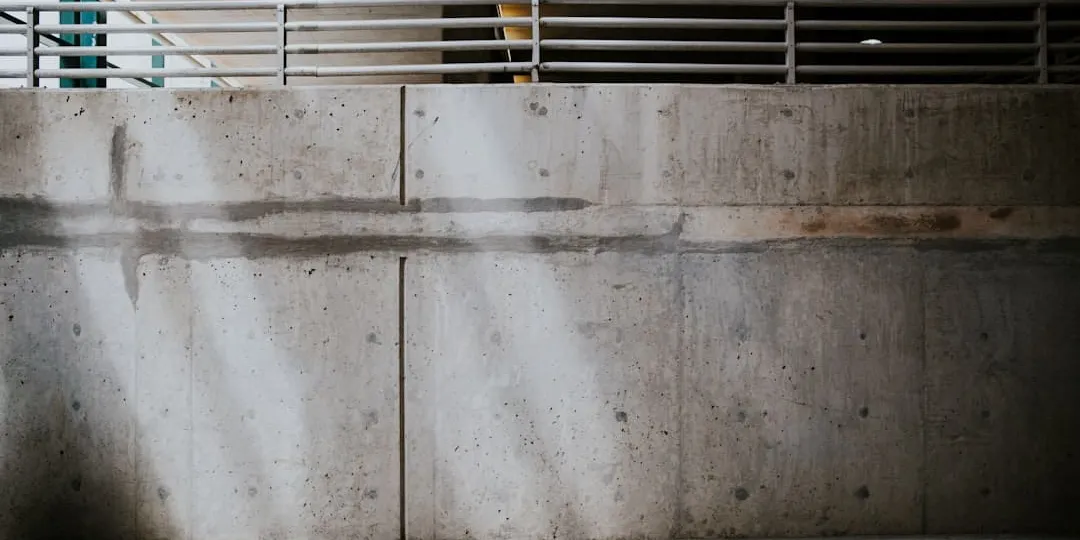
What this service covers
Concrete is the material we reach for when a wall needs to hold back significant earth, support a driveway or structure, or survive in a high-water area. Poured concrete retaining walls are the strongest option we install — a continuous reinforced structure with no joints for water to exploit. We also install concrete block (CMU) walls, which combine the strength of concrete with a modular look. Both options handle New England freeze-thaw better than any other material when properly built with drainage and reinforcement. If you need a wall that's as much engineering as aesthetics, this is the page.
Why Concrete for Retaining Walls
Concrete is the strongest material available for retaining walls, and it's not close. A poured concrete wall is a single continuous structure — no joints, no blocks that can shift independently, no gaps for water to exploit. When reinforced with rebar, it handles lateral earth pressure that would crack or topple other materials. For walls over 6 feet, or any wall holding back a structural load (a driveway, a building, a parking area), concrete is usually the right answer.
Durability is the other argument. Concrete doesn't rot, doesn't settle unevenly over time the way block walls can, and when sealed properly it resists the salt and freeze-thaw damage that degrades other materials. A well-built concrete wall in Newton will outlast every other material by decades. The trade-off is cost — concrete is more expensive than segmental block — and aesthetics, which some homeowners find too industrial for a residential setting.
That said, concrete doesn't have to look like a highway sound barrier. Modern forming techniques can add texture, pattern, and even color to poured concrete. And concrete block walls (CMU) can be faced with stone veneer or stamped with patterns that look like natural stone from a few feet away.
When You Need a Concrete Retaining Wall
Concrete is the material we reach for when other options aren't strong enough. If your wall needs to hold back a driveway, support a structure, or handle significant lateral earth pressure, concrete is usually the right call. Here's how to tell if you're in that situation.
Walls over 6 feet tall almost always warrant concrete. At that height, the lateral force from the soil behind the wall is substantial, and segmental block or timber may not have the structural capacity without extensive reinforcement that costs nearly as much as just going concrete. If your wall is holding back a hillside with a house, driveway, or parking area on top, concrete handles the dead load and live load that other materials can't.
High-water areas are the other trigger. If your property has a high water table — common near the Charles River in Auburndale and Newton Lower Falls — or if heavy clay soil holds water for days after rain, the hydrostatic pressure on a wall is massive. Concrete handles that pressure better than any other material, especially when paired with proper drainage behind the wall.
You might also choose concrete for aesthetic reasons. Modern homes in Newton Centre and Chestnut Hill sometimes call for clean, minimalist walls that match contemporary architecture. Poured concrete can be colored, textured, or formed with patterns to complement a modern landscape design. Not every concrete wall has to look like a highway barrier.
Poured Concrete vs. Concrete Block (CMU)
Poured concrete is what most people picture when they think 'concrete wall.' We build forms on site, set rebar reinforcement, and pour concrete into the forms in a single continuous pour. The result is a seamless wall with no joints — maximum strength, minimum water infiltration. The downsides are that forming is labor-intensive (which drives cost), and the wall needs to cure before backfilling, which adds a few days to the timeline.
Concrete block (CMU) walls use standard concrete blocks laid with rebar and grouted cells. They're modular, faster to install than poured, and can be built in stages. Each grouted cell with rebar is a small structural column, so a properly built CMU wall is very strong — though not quite as strong as a continuous pour. CMU is also easier to face with stone veneer or stucco if you want a different look.
For most residential projects in Newton, either works. We recommend poured concrete when the wall is over 8 feet, when it's holding back a structural load, or when the homeowner wants the cleanest possible modern look. CMU is the better choice when cost is a factor, when the wall will be faced with another material, or when the site access makes a concrete pump impractical.
Drainage and Reinforcement
Even concrete needs drainage. This surprises people — concrete is solid, so how does water get behind it? The answer is that water gets behind every retaining wall, through the soil, through cracks in the surface above, through the joint between wall and soil. If it has nowhere to go, it builds hydrostatic pressure that can crack or tip a concrete wall just like any other.
We install drainage stone and a perforated pipe behind every concrete wall, venting to daylight or a storm drain. For poured concrete walls, we also add weep holes through the wall at regular intervals, giving water an escape path if it does penetrate. The rebar schedule is designed for the wall height and earth pressure — we don't guess, we calculate it.
In Newton's glacial till soil, drainage is especially important. Clay-rich areas like Newtonville and West Newton hold water longer than sandy soils, which means the pressure behind the wall builds higher and lasts longer after rain. We design drainage for the worst case, not the average.
Why Concrete Walls Fail
Concrete is the strongest material we use, but it's not invincible. When a concrete retaining wall fails, the cause is almost never the concrete itself — it's what's behind it or below it. Understanding the failure modes helps you spot problems early and decide whether repair or replacement makes sense.
Hydrostatic pressure is the number one killer. Even a solid concrete wall can't hold back water that has nowhere to go. If the drainage stone and pipe behind the wall get clogged with fine soil particles — which happens over years as clay migrates through the backfill — water builds up behind the wall. A poured concrete wall under hydrostatic pressure will crack, typically at the weakest point near the base or mid-height. A CMU wall will separate at the joints, with individual blocks shifting outward.
Footing failure is the second most common cause. If the footing wasn't dug below the frost line, or the base wasn't properly compacted, the wall heaves upward in winter as the soil freezes beneath it. This movement cracks the wall at the base and tilts it forward. In Newton's glacial till soil, which has mixed clay and sand, footing depth matters more than anywhere because the clay holds water that freezes and expands.
Rebar corrosion is a slower failure mode that affects older concrete walls. If the concrete wasn't properly sealed or has developed surface cracks, water reaches the rebar inside. Over years, the rebar rusts and expands, which cracks the concrete from the inside out. You'll see rust stains on the face of the wall before you see the cracks — that's the warning sign. A wall with corroded rebar needs replacement, not repair.
The good news is that all of these failure modes are preventable with proper installation. Drainage that's designed for the worst case, footings below the frost line, and proper concrete cover over the rebar will keep a concrete wall standing for 50 to 75 years or more in New England's climate.
Repair vs. Replacement for Concrete Walls
Concrete walls have a clear decision point: if the wall is cracked but structurally sound, repair is usually the right call. If the wall has shifted, tilted, or lost structural integrity, replacement is safer and more cost-effective.
Surface cracks in poured concrete — hairline cracks less than 1/8 inch wide — can be sealed with epoxy injection. This restores the wall's monolithic structure and prevents water infiltration. Crack repair runs $300 to $800 depending on crack length and depth, and it's a permanent fix as long as the underlying cause (drainage, settling) is addressed.
Drainage failure on a concrete wall is fixable without replacing the wall, but it's not cheap. We excavate behind the wall, replace the drainage stone and pipe, and backfill with clean gravel. This costs $2,000 to $5,000 depending on wall height and access, but it saves the wall from the hydrostatic pressure that would eventually destroy it. If the wall is otherwise in good shape, this repair extends its life by decades.
Replacement becomes the better choice when the footing has failed, when the wall has tilted more than 2 inches out of plumb, or when the rebar has corroded. These are structural failures that repair can't safely address. A new wall with proper engineering, footing, and drainage will outlast any attempted repair on a structurally compromised wall. We'll show you the costs both ways and let you decide — but we won't recommend a repair that we know won't hold.
Cost and Timeline
Concrete retaining walls in the Newton area typically run $40 to $60 per square foot for poured concrete, and $30 to $45 per square foot for CMU. That includes excavation, footing, reinforcement, drainage, and finishing. Walls over 6 feet that require engineering stamps add to the cost. We give you an itemized quote so you see exactly what drives the number.
Timeline for a typical residential concrete wall is 5 to 10 working days — longer than block or stone because of the forming and curing process. We protect the site during curing and keep you informed at each stage. For walls requiring a permit, we handle the Newton building department submission and inspection schedule.
Frequently Asked Questions
How much does a retaining wall cost in Newton, MA?
Most retaining walls in the Newton area run $20 to $60 per square foot depending on the material and wall height. Concrete and poured walls tend toward the higher end; landscape timber and segmental block walls are more budget-friendly. Every project is different — we give you a free, no-pressure quote so you know the exact number before any work starts.
Do I need a permit to build a retaining wall in Newton?
Newton requires a building permit for retaining walls over 4 feet tall (measured from the bottom of the footing). Walls under 4 feet usually don't need one, but it depends on site conditions and proximity to property lines. We handle the permit process for you — you don't have to deal with the town yourself.
How long does a retaining wall last?
A properly built retaining wall should last 50 years or more. The key word is "properly" — poor drainage, inadequate footing depth, and cheap materials cut that lifespan to 10-15 years. We build walls to handle New England freeze-thaw cycles, not just to look good on day one.
What's the best material for a retaining wall in Massachusetts?
It depends on what the wall needs to do. Concrete is the strongest and best for structural walls holding back significant earth. Natural stone looks the best and weathers beautifully. Segmental block (interlocking concrete blocks) is a great middle ground — durable, affordable, and available in textures that mimic stone. We'll recommend the right material for your specific situation, not whatever's most profitable for us.
Can you fix a leaning or cracked retaining wall?
Sometimes. If the wall is leaning less than 2 inches and the cracks are surface-level, repair is usually possible — we reinforce, re-drain, and stabilize. If it's leaning significantly or the footing has failed, replacement is safer and often cheaper than a repair that won't hold. We'll give you an honest assessment either way.